Original: $29.99
-65%$29.99
$10.50The Story


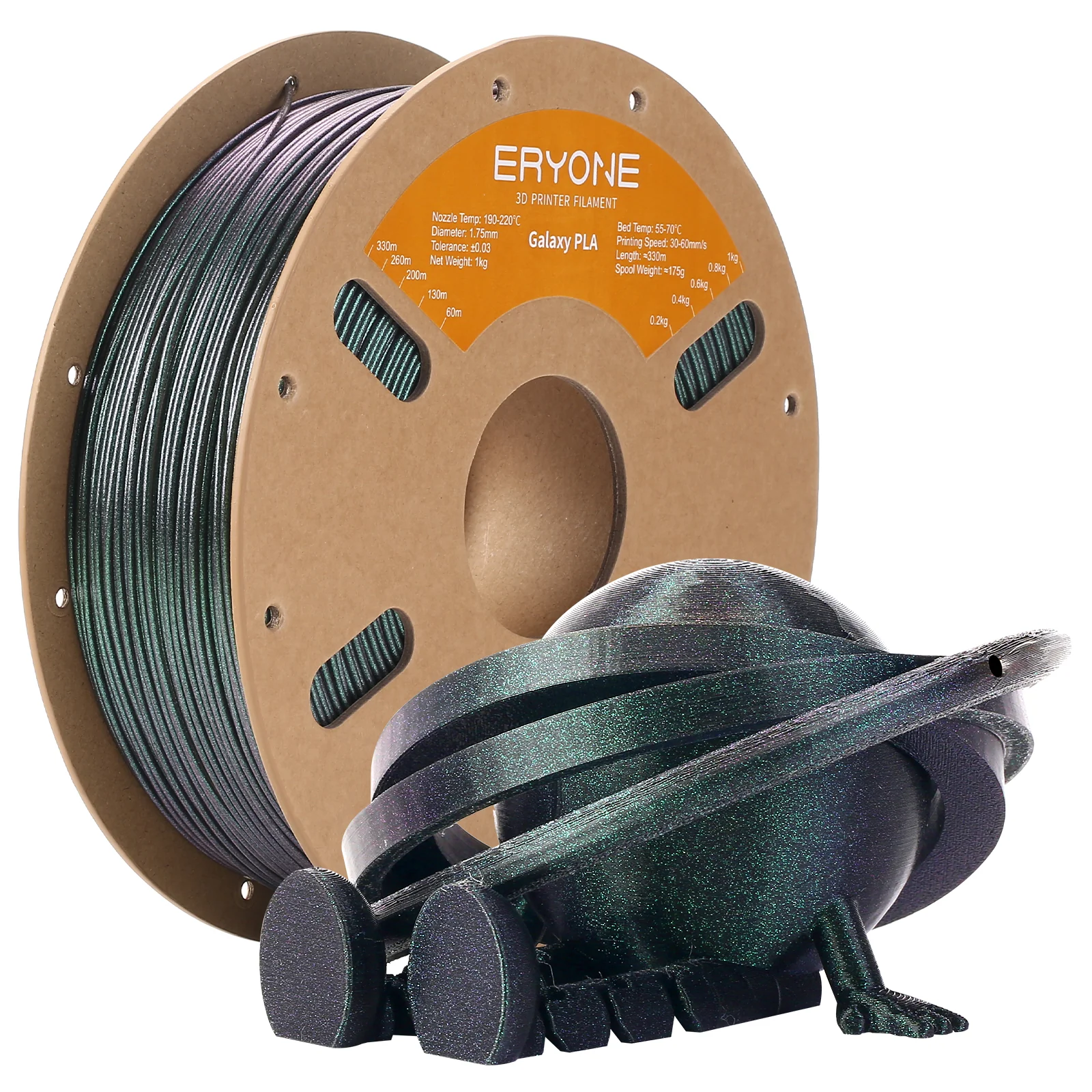
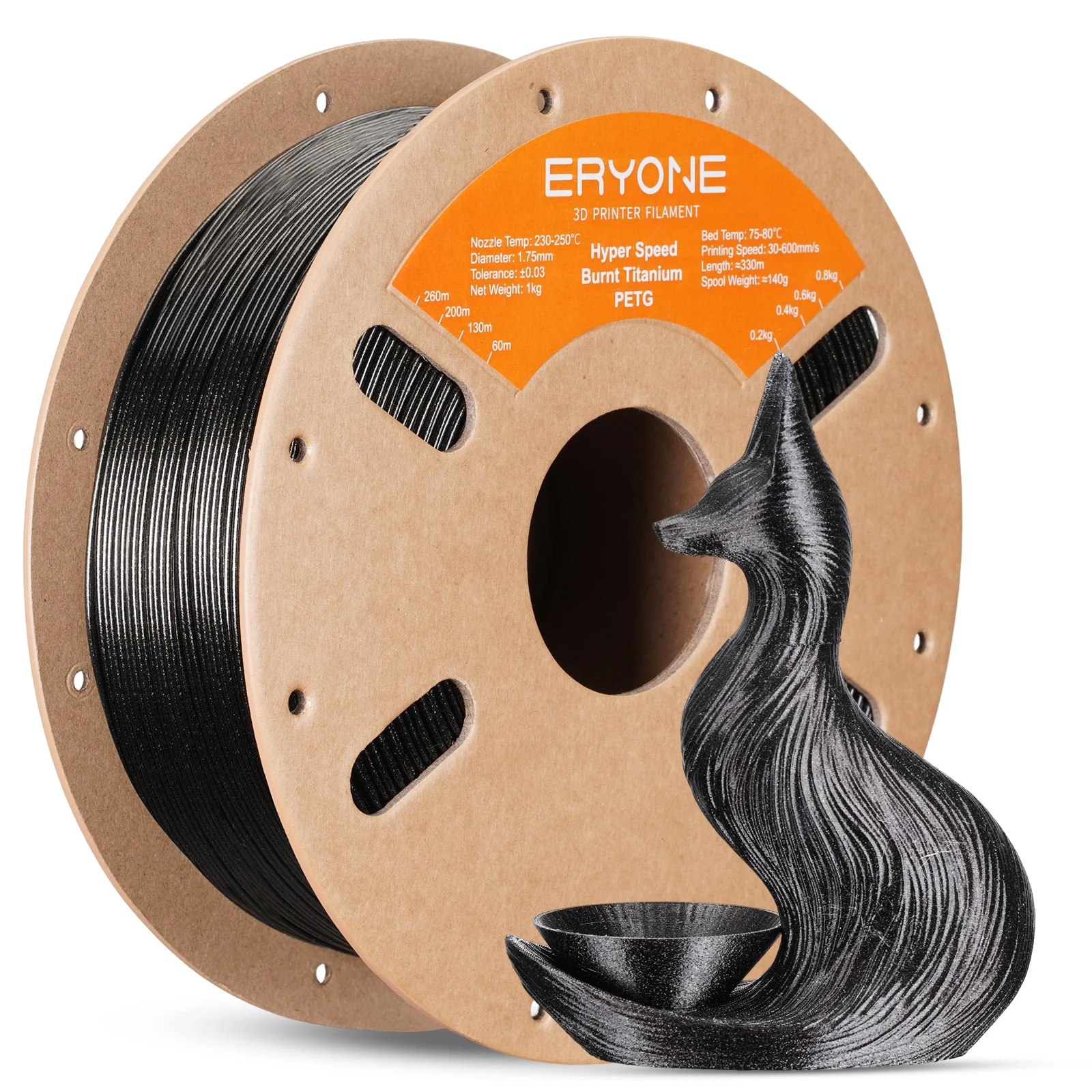
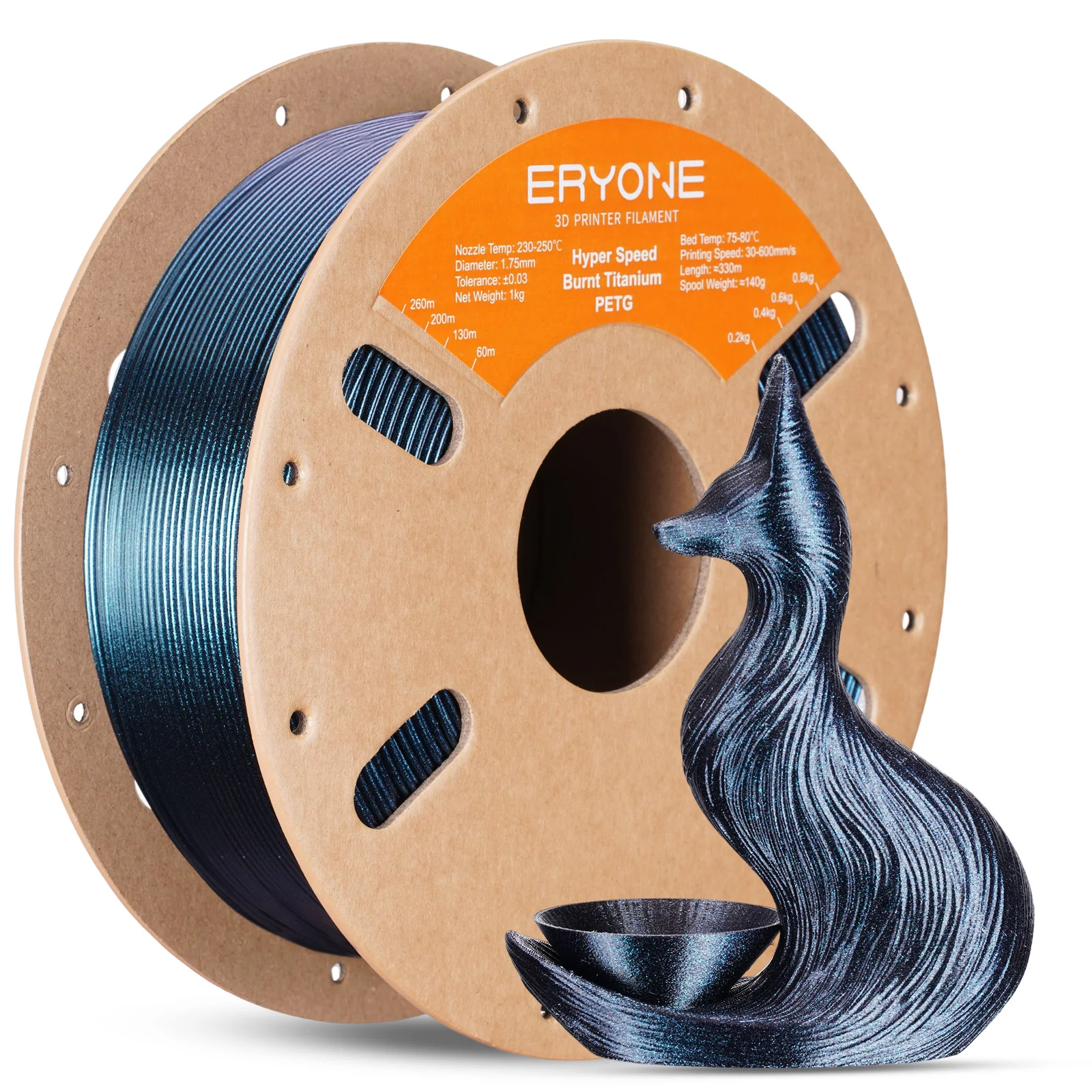
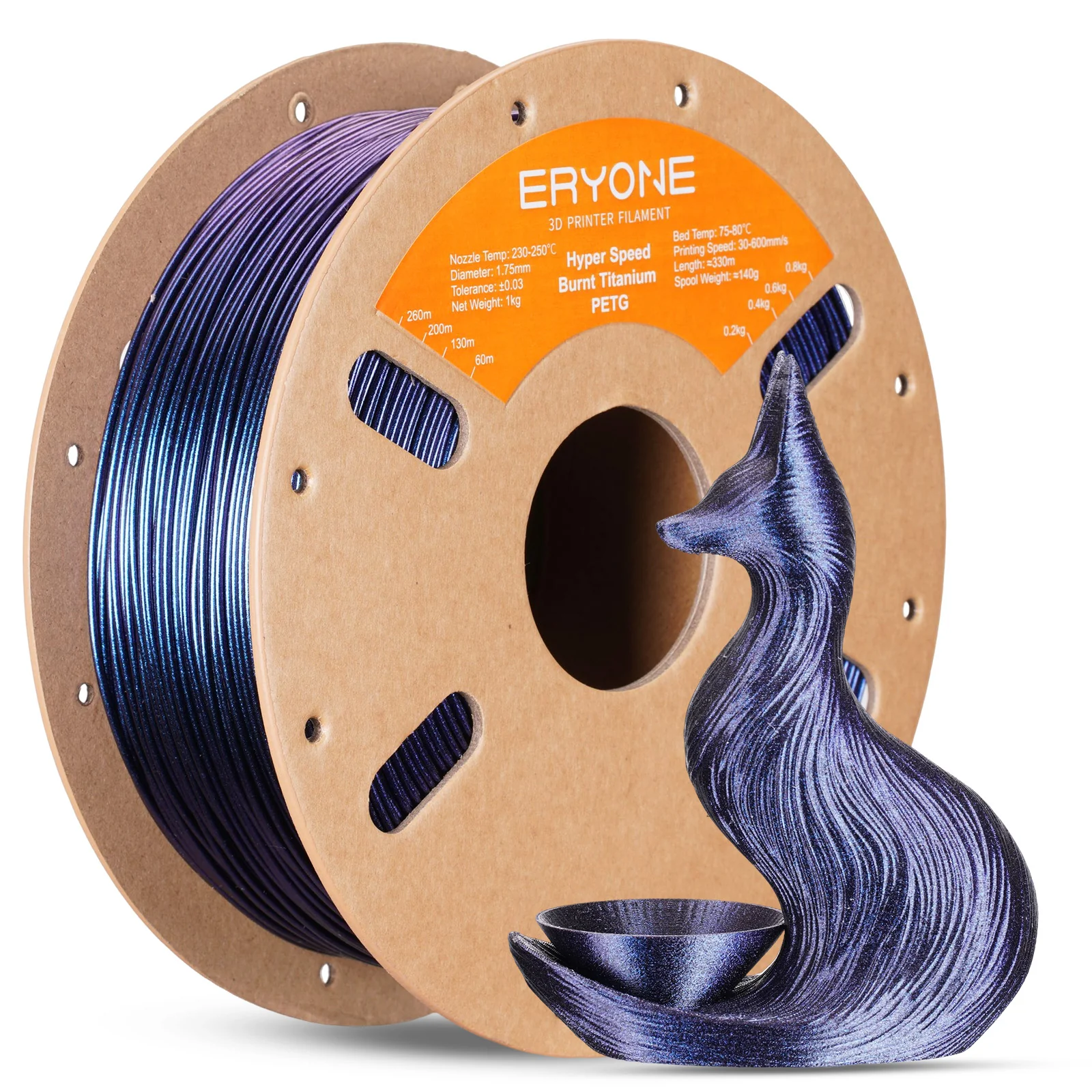
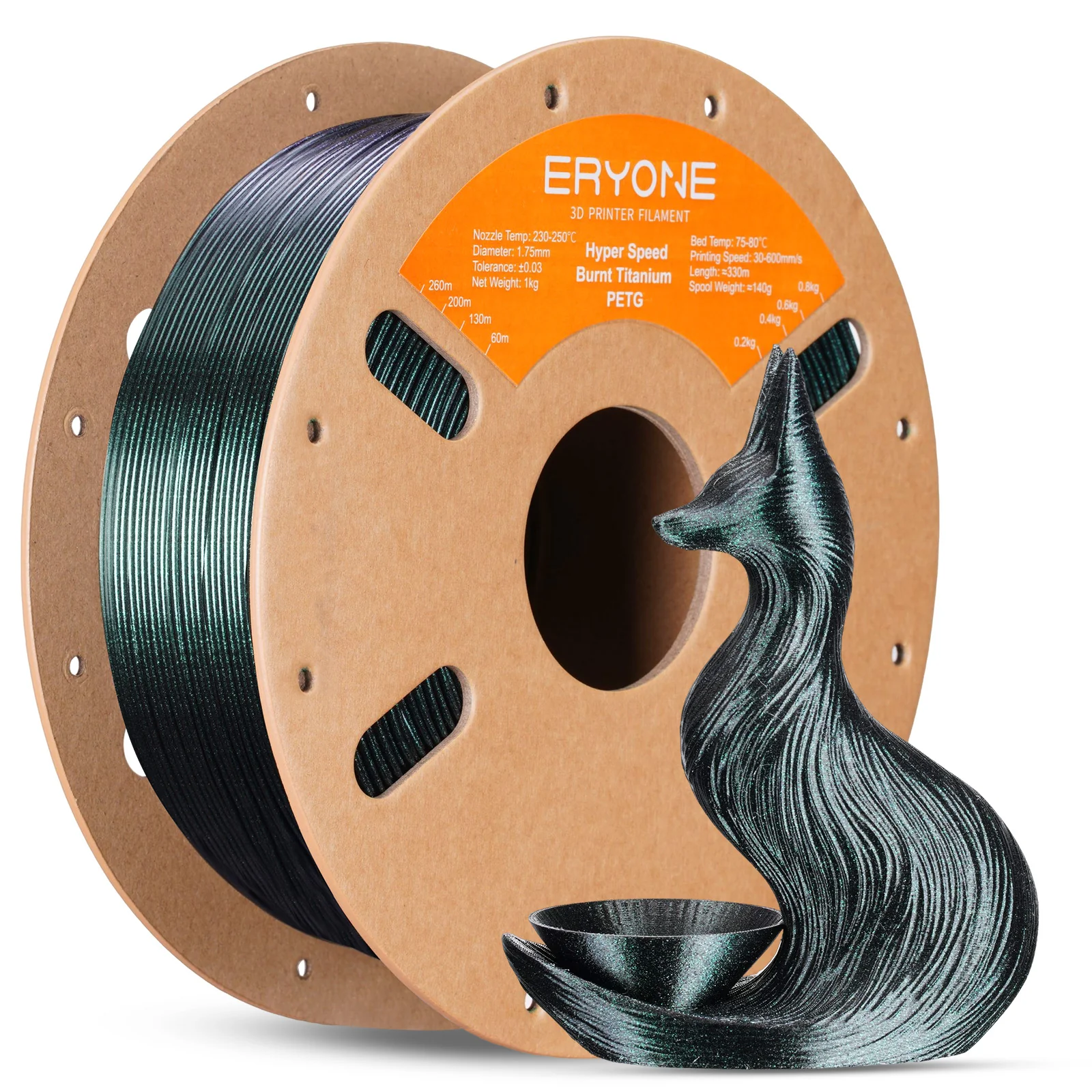
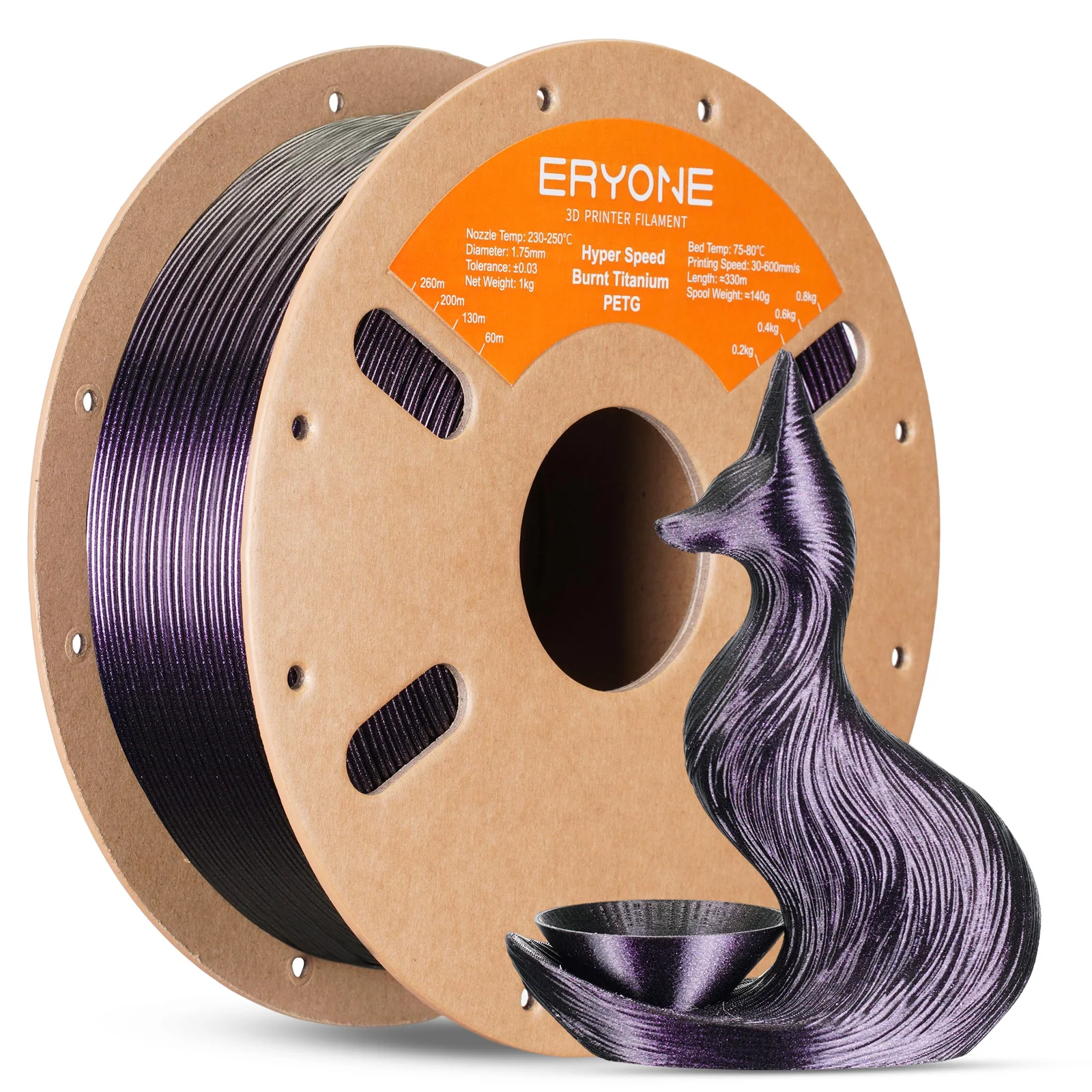
Eryone High Speed Burnt Titanium PETG 3D Printing Filament is a material that
Part I:Suggests Printing Parameters
| Parameter | Set up |
| Nozzle temperature | 230-250 ℃ |
| Bed temperature | 75-80℃ |
| Bed materia | glass, PEI, spring steel plate |
| Bottom printing temperature | 230-250 ℃ |
| Sealed printing |
enclosed printing/open printing
|
| Printing speed | 30-600mm/s |
| Drying conditions | 65℃, 12h |
Part II: Physical Properties of Materials
| Property | Testing Method | Unit | Typical Value |
| Density(g/cm³ at 21.5 ° C) | ASTM D792 (ISO 1183, GB/T 1033) | g/cm³ | 1.25 |
| Vicat Softening Temperature(° C) | ASTM D1525 (ISO 306 GB/T 1633) | ℃ | 78 |
| Heat distortion temperature(° C) | ASTM D648 1.8MPa 0.45MPa | ℃ | 67 |
| Glass transition temperature (° C) | DSC, 10 ° C/min | ℃ | 68 |
| Melt Index(g/10 min) | 220 ° C, 10kg 240 ° C, 2.16 kg | g/10min | 18±2 |
Part III: Mechanical Properties of Printed Samples
| Property | Test conditions | Test standards | unit | Typical Value |
| Tensile strength X-Y | 50mm/min | GB/T 1040.4 | MPa | 45.7 |
| Elastic modulus X-Y | 50mm/min | GB/T 1040.1-2006 | MPa | 1301.9 |
| Elongation at break X-Y | 50mm/min | GB/T 1040.4 | % | 2.7 |
| Tensile strength X-Z | 50mm/min | GB/T 1843 | MPa | 31.7 |
| Elastic modulus X-Z | 50mm/min | GB/T 1040.1-2006 | MPa | 1022.5 |
| 5Elongation at break X-Z | 50mm/min | GB/T 1040.4 | % | 2.1 |
| Bending strength | 2mm/min | GB/T 9341 | MPa | 70.2 |
| Bending modulus | 2mm/min | GB/T 9341 | MPa | 1953.2 |
| Charpy Impact strenght | 2.75J | GB/T 1843 | kJ/m2 | 2.4 |
Note: All splines are printed under the following conditions: printing temperature=240 ° C, printing speed=80mm/s, base plate 60° C, filling=100%, nozzle diameter=0.4mm
Details & Craftsmanship
Every detail has been carefully considered to bring you the perfect product.
Details & Craftsmanship
Every detail has been carefully considered to bring you the perfect product.
Details & Craftsmanship
Every detail has been carefully considered to bring you the perfect product.
Details & Craftsmanship
Every detail has been carefully considered to bring you the perfect product.
Description
Eryone High Speed Burnt Titanium PETG 3D Printing Filament is a material that
Part I:Suggests Printing Parameters
| Parameter | Set up |
| Nozzle temperature | 230-250 ℃ |
| Bed temperature | 75-80℃ |
| Bed materia | glass, PEI, spring steel plate |
| Bottom printing temperature | 230-250 ℃ |
| Sealed printing |
enclosed printing/open printing
|
| Printing speed | 30-600mm/s |
| Drying conditions | 65℃, 12h |
Part II: Physical Properties of Materials
| Property | Testing Method | Unit | Typical Value |
| Density(g/cm³ at 21.5 ° C) | ASTM D792 (ISO 1183, GB/T 1033) | g/cm³ | 1.25 |
| Vicat Softening Temperature(° C) | ASTM D1525 (ISO 306 GB/T 1633) | ℃ | 78 |
| Heat distortion temperature(° C) | ASTM D648 1.8MPa 0.45MPa | ℃ | 67 |
| Glass transition temperature (° C) | DSC, 10 ° C/min | ℃ | 68 |
| Melt Index(g/10 min) | 220 ° C, 10kg 240 ° C, 2.16 kg | g/10min | 18±2 |
Part III: Mechanical Properties of Printed Samples
| Property | Test conditions | Test standards | unit | Typical Value |
| Tensile strength X-Y | 50mm/min | GB/T 1040.4 | MPa | 45.7 |
| Elastic modulus X-Y | 50mm/min | GB/T 1040.1-2006 | MPa | 1301.9 |
| Elongation at break X-Y | 50mm/min | GB/T 1040.4 | % | 2.7 |
| Tensile strength X-Z | 50mm/min | GB/T 1843 | MPa | 31.7 |
| Elastic modulus X-Z | 50mm/min | GB/T 1040.1-2006 | MPa | 1022.5 |
| 5Elongation at break X-Z | 50mm/min | GB/T 1040.4 | % | 2.1 |
| Bending strength | 2mm/min | GB/T 9341 | MPa | 70.2 |
| Bending modulus | 2mm/min | GB/T 9341 | MPa | 1953.2 |
| Charpy Impact strenght | 2.75J | GB/T 1843 | kJ/m2 | 2.4 |
Note: All splines are printed under the following conditions: printing temperature=240 ° C, printing speed=80mm/s, base plate 60° C, filling=100%, nozzle diameter=0.4mm